
Why Is Water Pooling Around My Foundation After It Rains?

Water pooling around the foundation after a storm usually means the water isn’t being moved far enough away from the house.
Sometimes the problem starts with the gutters.
Sometimes it’s the downspouts.
Sometimes the underground drainage system is backed up.
And sometimes the grading around the home is sending water right back toward the foundation.
The important thing is figuring out where the water is coming from and why it isn’t draining away.
Here are some of the most common reasons we see water collect around Kansas City homes after rain.
1. The Gutters Are Overflowing
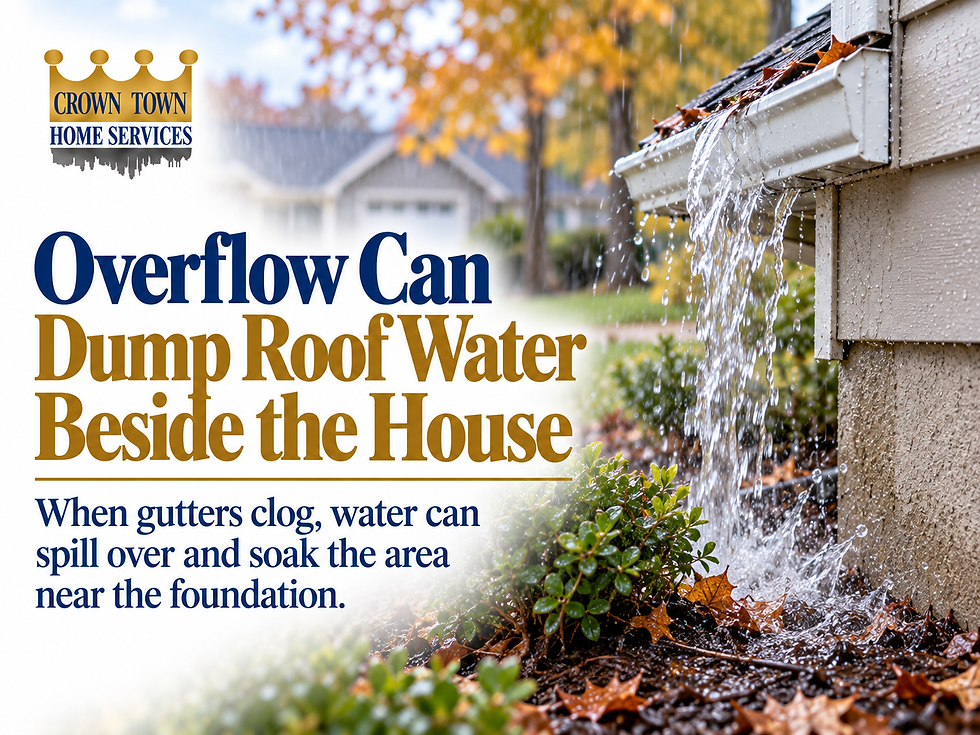
If the gutters are clogged, water may spill over the edge instead of reaching the downspouts.
That means roof runoff can land directly beside the house.
During a heavy storm, that can be a lot of water hitting the same area in a short period of time.
Signs the gutters may be part of the problem include:
Water spilling over the gutter during rain
Mulch or soil washing away below the roofline
Muddy areas directly beneath the gutter
Water stains on siding or fascia
Puddles forming where the overflow lands
If you’re seeing that, the first step may simply be gutter cleaning.
We also break down the common causes of overflow in Why Are My Gutters Overflowing? 6 Common Causes for Kansas City Homes.
2. The Downspout Is Discharging Too Close to the Foundation
A gutter can be completely clean and still create a drainage problem if the downspout empties right beside the house.
The whole point of the system is to move roof water away.
If the water exits only a few inches from the foundation, it may simply soak into the soil beside the house.
That can create:
Persistent puddles
Muddy areas
Soil erosion
Washed-out landscaping
Water collecting near basement or crawl-space walls
Sometimes a simple extension is enough to move the discharge farther away.
Other properties may need a more complete drainage solution.
3. The Downspout Is Clogged
A clogged downspout can cause problems at both ends of the system.
At the top, the gutter may overflow.
At the bottom, water may barely come out at all.
That means the roof water is either backing up above or escaping somewhere it shouldn’t.
Signs of a clogged downspout include:
Very little water coming out during heavy rain
Overflow near the downspout opening
Water leaking from downspout seams
Standing water in the gutter
Gurgling or unusual drainage sounds
Our guide to 7 Signs Your Downspouts Are Clogged or Not Draining Properly explains what to look for.

4. The Underground Drain Is Backed Up
Many homes have downspouts connected to underground drain lines.
When those lines are working, they carry water farther away from the house.
When they clog, the water may have nowhere to go.
You may notice:
Water bubbling around the drain connection
Pooling near the base of the downspout
Slow drainage even after the gutter is cleaned
Water backing up during heavier storms
The same wet area forming every time it rains
Underground lines can collect:
Leaves
Mud
Roof grit
Small sticks
Roots
Other debris
If the gutter and downspout above ground are clear but the water still isn’t moving, underground drain cleaning may be the next thing to check.
5. The Ground Slopes Toward the House
Not every foundation puddle is a gutter problem.
The shape of the ground matters too.
Ideally, water should naturally move away from the foundation.
If soil has settled over time or landscaping has changed the grade, water may flow back toward the house instead.
Signs grading may be involved include:
Water pooling even when the gutters are working
A visible low spot beside the foundation
Landscaping beds that slope toward the house
Water from the yard moving toward the foundation
Puddles forming away from the downspouts
In that case, gutter cleaning alone won’t solve the whole problem.
The drainage around the property may need attention too.

6. A Roof Valley Is Concentrating Too Much Water in One Area
Roof valleys can send a large amount of water into a short section of gutter.
During heavy rain, that concentrated runoff may overwhelm a gutter that already has:
Partial debris buildup
A slow downspout
Poor pitch
A low spot
A small drainage restriction
When that happens, water may spill over in one specific location and dump directly beside the home.
If the puddle always forms below the same roof valley or corner, watch that section during the next rain.
The location of the overflow can tell you a lot.
7. The Gutter Is Sagging or Pitched Wrong
A sagging gutter may hold water instead of moving it toward the downspout.
Eventually, that low spot can overflow.
If the overflow happens close to the foundation, all of that water lands in the wrong place.
Look for:
One section sitting lower than the rest
Standing water after rain
A gutter pulling away from the fascia
Overflow from the same low spot
Loose hangers
We cover that problem in Why Are My Gutters Sagging? 6 Common Causes for Kansas City Homes.
Why Does Foundation Drainage Matter?
A little puddle after one storm doesn’t automatically mean something serious is happening.
The bigger concern is repeated water collecting in the same area.
Over time, repeated saturation can contribute to:
Soil erosion
Washed-out landscaping
Muddy low spots
Water against basement or crawl-space walls
Drainage problems around the property
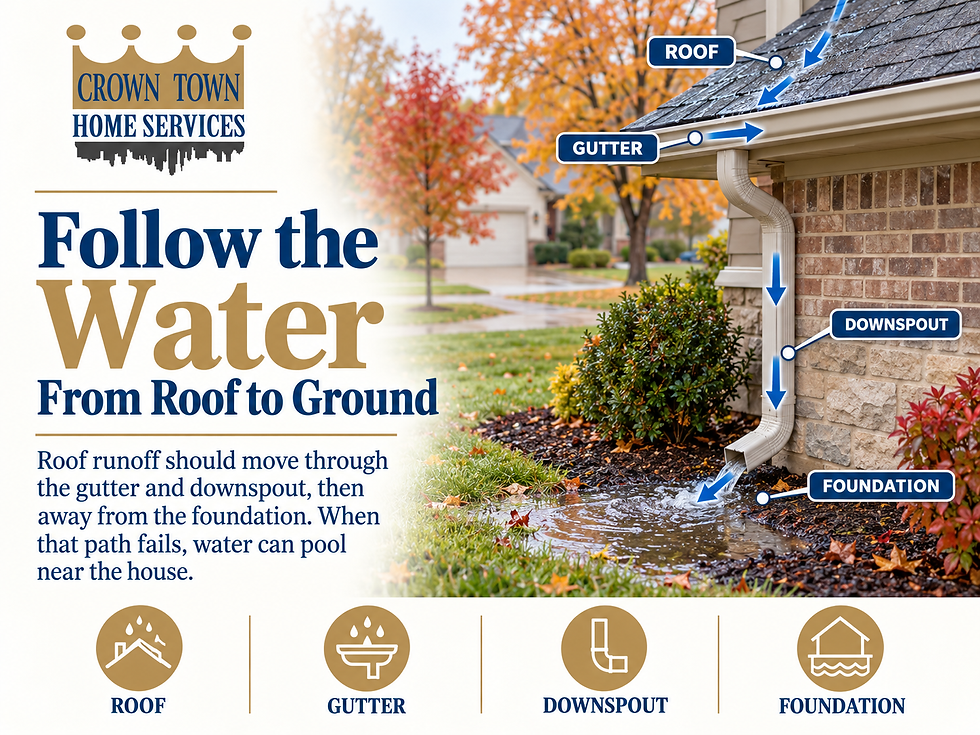
The goal of the gutter system is to reduce how much roof water ends up directly beside the house.
Roof water should be collected, moved through the downspouts, and discharged somewhere that can handle it.
How Can You Tell If the Gutters Are Causing the Problem?
One of the best things you can do is watch the house while it’s raining.
From the ground, look at:
Whether the gutters are overflowing
Whether the downspouts are moving water
Where the water exits
Whether the underground drains are backing up
Where the puddles begin forming
If the water is clearly coming from the roofline or downspout area, the gutter system is probably part of the problem.
If the gutters are working correctly but the entire yard slopes toward the house, grading may be the bigger issue.
Is This a Cleaning Problem, Repair Problem, or Drainage Problem?
Sometimes the answer is obvious.
Other times, multiple problems are happening at once.
It may be a cleaning problem if:
The gutters are full of debris
The downspouts are clogged
Water is overflowing from packed sections
The problem improves after cleaning
It may be a repair problem if:
The gutter is sagging
Water is running behind the gutter
A seam is leaking
The pitch is wrong
It may be a drainage problem if:
Water backs up at the bottom of the downspout
Underground lines are slow or blocked
The ground slopes toward the home
Puddles remain even when the gutters are working
Our guide on gutter cleaning vs. repair can help separate the first two.
What Should You Do First?
Start with the visible drainage system.
Make sure:
The gutters are clear
The downspouts are open
Water can leave the gutter
Downspouts discharge away from the house
Underground drains aren’t obviously backing up
Once you know the gutter system is working, it becomes easier to tell whether the property itself has another drainage problem.
That’s a lot better than guessing.
Need Help Figuring Out Where the Water Is Coming From?
Crown Town Home Services provides gutter cleaning, small gutter repairs, and underground drain cleaning throughout Kansas City and surrounding communities.
We can clear the gutter debris, check the downspouts, look for obvious gutter problems, and help identify whether the drainage issue appears to continue below ground.
If the gutters are the problem, we’ll tell you.
If the water is coming from something outside the gutter system, we’ll tell you that too.
The goal is simple: move the roof water away from the house instead of letting it collect beside the foundation.


